
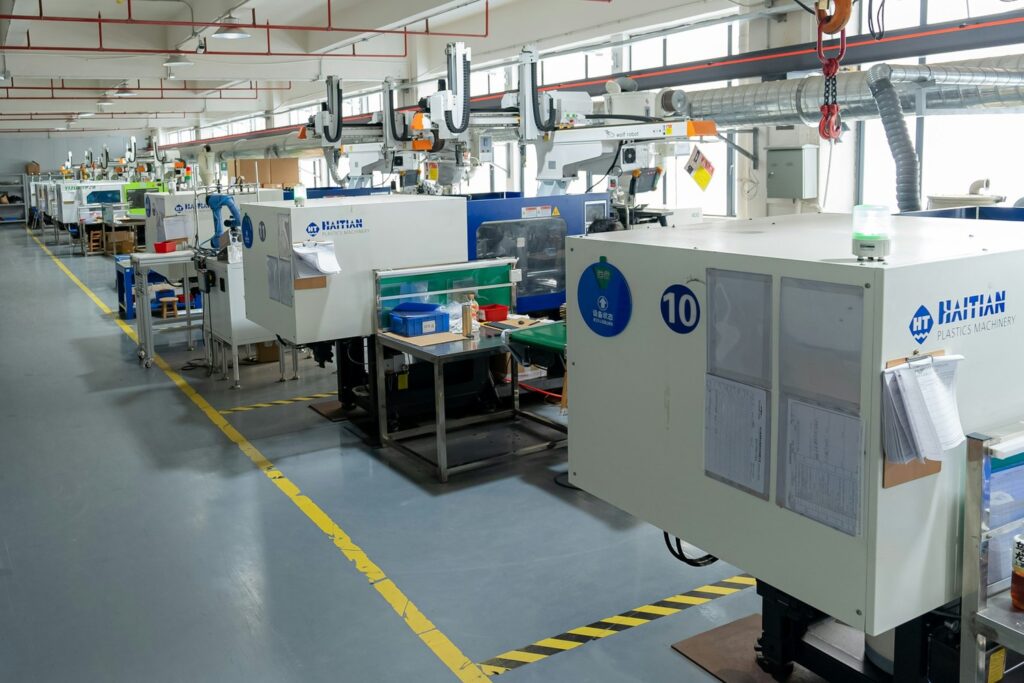
Plastic contract manufacturing Malaysia is the route many brands, distributors and product developers take when they need plastic parts made but do not want to run a factory of their own. You supply the idea, drawing or sample, and a manufacturer handles the tooling, moulding, finishing and delivery.
It suits a hardware brand adding a new tap fitting just as well as an industrial buyer who needs a custom component made to specification. The factory brings the machines, toolmakers and quality checks, while you keep control of the product, the brand and the market.
This guide explains what plastic contract manufacturing includes, how a typical project runs, what to prepare before you contact a factory and how to choose a partner in Malaysia.
What Is Plastic Contract Manufacturing?
Plastic contract manufacturing means a factory produces plastic products for another company, made to that company’s specification and sold under its own name.
In practice the term overlaps with OEM manufacturing, because both describe a factory making goods for another brand. Contract manufacturing puts the emphasis on the service a factory provides across the whole job, from the first brief to packed goods. Our guide to choosing an OEM manufacturer in Malaysia looks at the same capability from the brand’s side.
The process behind most plastic parts is injection moulding. Heated plastic is injected into a steel mould, cooled and ejected as a finished part. Because the mould is made for one product, the factory that builds and maintains it has a large say in how consistent your parts will be.
Why Brands Use Plastic Contract Manufacturing
Running injection moulding in-house needs machines, tooling expertise, inspection equipment and floor space. Contract manufacturing lets a business reach professional production without carrying all of that itself. The main reasons brands choose it are:
- Access to injection machines and toolmakers without building a plant
- One supplier responsible for tooling, moulding and finishing
- A clear route from prototype to repeat orders as demand grows
- More time for your own team to focus on design, sales and customers
- Support for existing moulds that need repair or adjustment
For plastic hardware such as taps, valves and fittings, the factory that moulds the part can also advise on thread sizes, wall thickness and assembly, which helps avoid avoidable design revisions.
What Plastic Contract Manufacturing Malaysia Typically Covers
When you look for plastic contract manufacturing Malaysia buyers can rely on, check that the service covers the full job and not just the moulding step. A complete service normally includes:
- Design support and a review of your drawing or sample
- Prototype construction to test design, fit and performance
- Custom mould building and mould maintenance
- Plastic injection moulding, including insert moulding and gas-assisted moulding where the part needs it
- Secondary operations such as assembly, trimming, labelling and packaging
- Quality inspection against your specification
- Packing, shipping and support for reorders
Not every project needs every step. A simple part from an existing drawing may go straight to tooling, while a new product usually starts with a prototype.
How a Plastic Contract Manufacturing Project Works
A typical project follows six stages. The order can change from job to job, but the logic stays the same.
1. Brief and Quote
Share your drawing, 3D file or physical sample, the material and finish you have in mind and the volume you expect. The factory reviews it and replies with a quote, a lead time and any design suggestions.
2. Prototype
A functional prototype lets you check size, fit and performance before you commit to a production mould. It is far cheaper to find a problem here than after the steel has been cut.
3. Tooling
The production mould is built to your approved design. In-house tooling matters because the toolmakers who built the mould can also adjust it if samples show a problem.
4. Sampling and Approval
The first parts from the new mould are measured and checked against your drawing. You approve them, or the mould is adjusted and sampled again.
5. Production and Quality Control
Once the samples are approved, parts run on the injection machines, followed by any trimming, assembly or labelling. Inspection happens during and after production, not only at the end.
6. Delivery and Reorders
Finished goods are packed to your requirements and shipped. The mould stays maintained and ready, so a reorder does not start from zero.
Sin Yang Plastic’s OEM Products page notes that projects can complete in as little as eight weeks, depending on tooling and part complexity. Ask any factory for a timeline that reflects your own part rather than a general promise.
What to Prepare Before You Contact a Factory
A clear brief gets a faster and more accurate quote. Before you send an enquiry, gather the following.
1. Drawings, 3D Files or a Sample
Even a rough sketch helps, but dimensions and tolerances are better. If you only have a physical sample, send it, and the factory can measure it.
2. Material and Finish
Say whether the part will be used indoors or outdoors, whether it will meet hot or cold water, and what colour or surface you want. These details guide the choice of plastic.
3. Expected Quantity
State the size of the first order and the yearly volume you hope for. Volume affects mould design and the number of cavities a factory will recommend.
4. Packaging and Labelling
Tell the factory if parts must be bagged, boxed, labelled or assembled before they ship, so the cost is in the first quote.
5. Target Timeline
Share the date you need parts by. A good factory will tell you honestly whether it is realistic.
How to Choose a Plastic Contract Manufacturer in Malaysia
Factories can look similar on paper. These six checks show the differences that matter once a project is running.
1. In-House Tooling
A factory that builds and repairs its own moulds can react quickly when a part needs changing. Outsourced tooling adds hand-offs and waiting time.
2. A Suitable Machine Range
Machines of different tonnage let a factory run both small and large parts. Ask what range it runs and what size of machine your part needs.
3. Quality Control You Can See
Look for an in-house testing facility, clear inspection steps and a willingness to explain how parts are checked.
4. Experience With Similar Products
A factory used to moulding hardware, packaging or industrial parts already knows the common pitfalls and can warn you early.
5. Clear Communication
You should get straight answers on price, lead time and what the factory needs from you, from the first reply onwards.
6. Capacity for Repeat Orders
A good first order is not enough. Check that the factory can keep supplying as your volumes grow.
Sin Yang Plastic’s Contract Manufacturing Capabilities
Sin Yang Plastic is an end-to-end plastic company in Kajang, Selangor, in the Klang Valley. Our plastic contract manufacturing service takes a concept through prototype, tooling, production, finishing and delivery, so you deal with one team for the whole project. Our capabilities include:
- 19 injection machines up to 560 tons
- Insert moulding and gas-assisted injection moulding
- Prototype construction and custom mould building in house
- Mould troubleshooting and maintenance for existing moulds
- Two manufacturing plants and a warehouse
- An in-house testing facility for quality checks
We also design and manufacture our own plastic hardware range, including the 2 way tap connector and stopcock valve models, so we know how moulded hardware performs in daily use. If you are still deciding how to structure your project, our guides to plastic mould manufacturing and custom plastic parts explain the tooling and design side in more detail.
Questions to Ask Before You Commit
Put these questions to every factory on your shortlist and compare the answers side by side:
- Who builds and maintains the mould?
- How are the first samples checked and approved?
- What lead time should I plan for tooling, and for production?
- What happens if a batch fails inspection?
- How will parts be packed and labelled for shipping?
- Can you support reorders and mould repairs later?
- Who will be my point of contact during the project?
Final Thoughts
Plastic contract manufacturing Malaysia suppliers differ most in how much of the job they handle themselves. A factory that offers prototyping, tooling, moulding and quality control under one roof gives you fewer hand-offs and a single team to work with.
If you have a drawing, a sample or an idea, send it to Sin Yang Plastic and we will recommend the right process, material and timeline. Contact our team to start, or read more on our services page.
Frequently Asked Questions
Common questions about plastic contract manufacturing