
A pipe tap for a garden or utility area needs to match both sides of the water point: the supply pipe behind it and the hose attached to it. Choosing by handle style alone can overlook the connection that matters most.
In this article, pipe tap means a water fitting connected to a supply pipe, commonly a bib or hose tap. It does not mean the workshop tool used to cut pipe threads. This guide concentrates on specifying a single hose point for cleaning, watering or general utility use.
Start With the Job the Water Point Must Do
Decide whether the outlet will mainly fill buckets, feed a garden hose or support regular wash-down tasks. That decision affects hose attachment, handle clearance and the position of the tap. A hose left connected every day presents a different practical requirement from a tap used briefly to fill a watering can.
Also note where the fitting sits. A low wall outlet may cause a hose to bend tightly against the floor, while a crowded utility corner can obstruct a lever. Photograph the space as well as the pipe connection when asking for advice.
Understand the Three Parts of a Hose Tap Connection
- The inlet: joins the tap to the water supply pipe or wall fitting.
- The tap body and control: provide the user-operated outlet.
- The hose connection: attaches the hose to the tap outlet.
A water pipe connector with tap may be described using any of these parts. To avoid confusion, specify the complete assembly you need and identify any components you already have. An adaptor may change the outlet connection, but it does not establish the tap’s pressure or temperature rating.
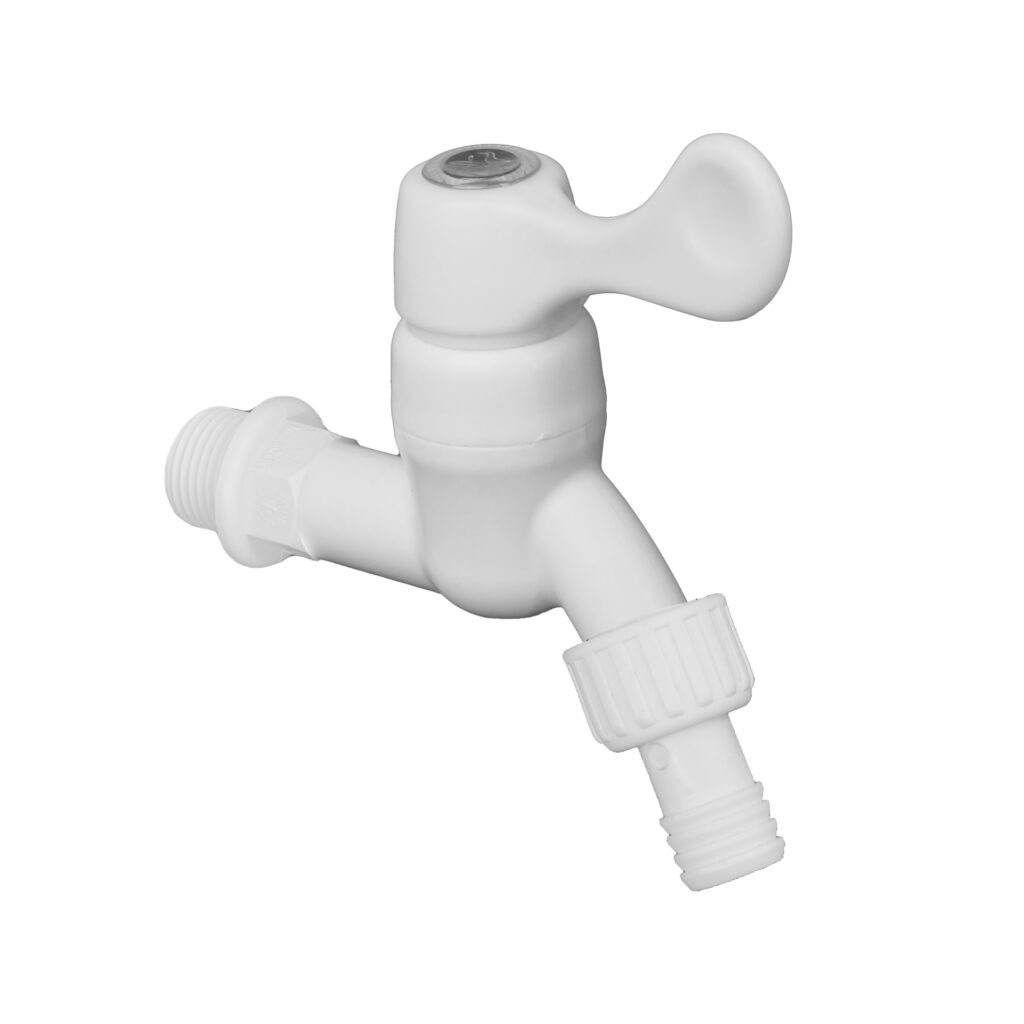
Pipe Tap Sizes: Confirm the Inlet and Hose Separately
The model 2313 product page lists a 1/2-inch BSP inlet and a 1/2-inch water hose connector. Although those labels use the same fraction, they refer to different connections. Check the supply fitting and hose against their respective specifications.
Do not assume that a hose described as 1/2-inch will connect to every 1/2-inch threaded part. Ask which connector, retaining component or adaptor is required for the exact outlet. If the existing fitting is unmarked, send clear photographs and have its specification confirmed.
Choose a Handle You Can Operate in the Installed Position
A lever head gives a clear operating surface, but it needs room to move. Check that a nearby wall, shelf, hose reel or bucket does not block the handle. The model 2313 listing identifies a lever head; confirm the movement and clearance from the current product drawing or a sample.
For repeated use, accessibility matters as much as appearance. Position the water point so the user can reach the control without pulling on the hose or leaning over stored items.
Match the Hose Connector to Your Existing Equipment
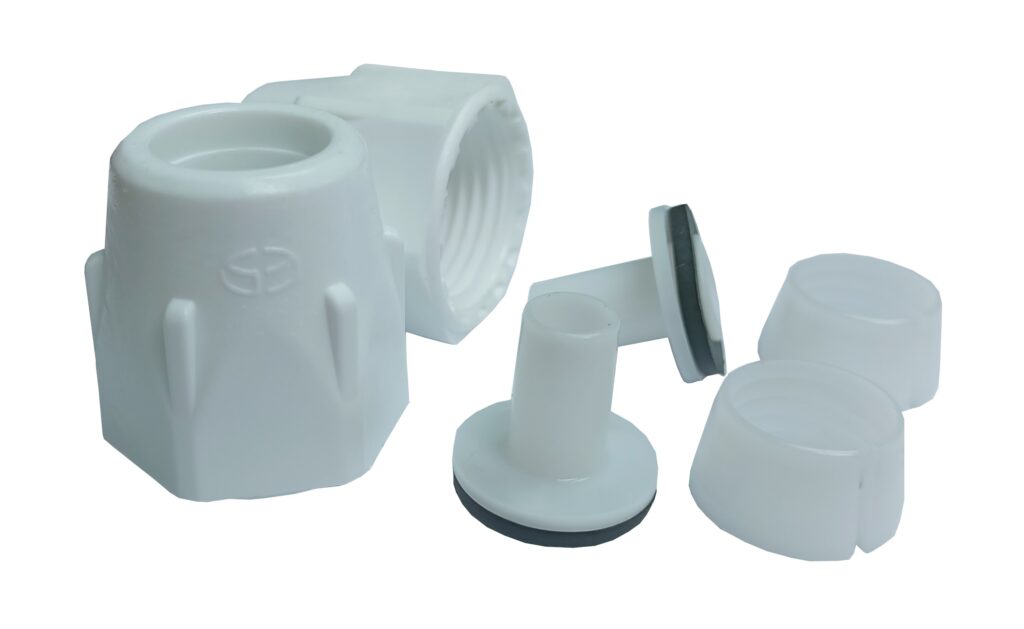
A hose tap can be paired with a connector kit where the components are compatible. The Sin Yang Plastic 2101 hose connector kit is part of the catalogue, but the exact contents and fit should be confirmed for your hose and tap before ordering.
- Identify the hose internal diameter and attachment type.
- Confirm which outlet adaptor or hose connector is included with the tap.
- Check whether an existing quick connector can be retained.
- Plan enough hose length to avoid strain at the water point.
- Ask how the hose connection should be secured and sealed.
Check the Operating Requirements Before Ordering
Handle style and colour do not tell you whether a pipe tap is suitable for hot water, a particular supply pressure or continuous connection to downstream equipment. Request the limits for the selected model and explain the intended use.
For an outdoor or utility point, also describe exposure to sunlight, frequent handling and cleaning products. Confirm the actual material and finish with the supplier if these affect your specification. Avoid substituting a general product description for a current model specification.
Keep a Hose Tap and a Stopcock Valve in Their Own Roles
A pipe tap delivers water at a usable outlet. A stopcock valve provides isolation within the supply system. A convenient hose-point control does not remove the need for suitable isolation when a fitting is serviced.
If you need two separate outlets from one water point, compare a two-way tap instead. Specifying the correct arrangement at the start is clearer than adding several adaptors later without checking space and compatibility.
Checks at Handover
After installation, check the inlet joint, hose attachment and outlet separately. Open and close the control, inspect for drips and confirm that the hose stays supported during use. Follow the product installation instructions; do not keep tightening a leaking fitting without identifying the cause.
If water appears at the wall connection, the hose joint or the outlet after closing, record which location is affected. Isolate the supply before inspection and ask a plumber to assess an uncertain or recurring leak. Clear observations help distinguish a connection problem from a tap problem.
What to Send With a Pipe Tap Enquiry
- The intended task and location of the water point
- A photograph and specification of the supply fitting
- Hose diameter and current connector details
- Required handle style and available clearance
- Pressure and temperature requirements, where known
- Model number, quantity and delivery requirements
Final Thoughts
A suitable pipe tap is the one that fits the supply, works with the hose and can be operated comfortably where it is installed. Confirming those details gives homeowners, contractors and stockists a clearer basis for ordering and replacement.
View the 2313 lever-head hose tap or contact Sin Yang Plastic to confirm the current specification for your water point.
Frequently Asked Questions
Common questions about pipe taps and single hose points