
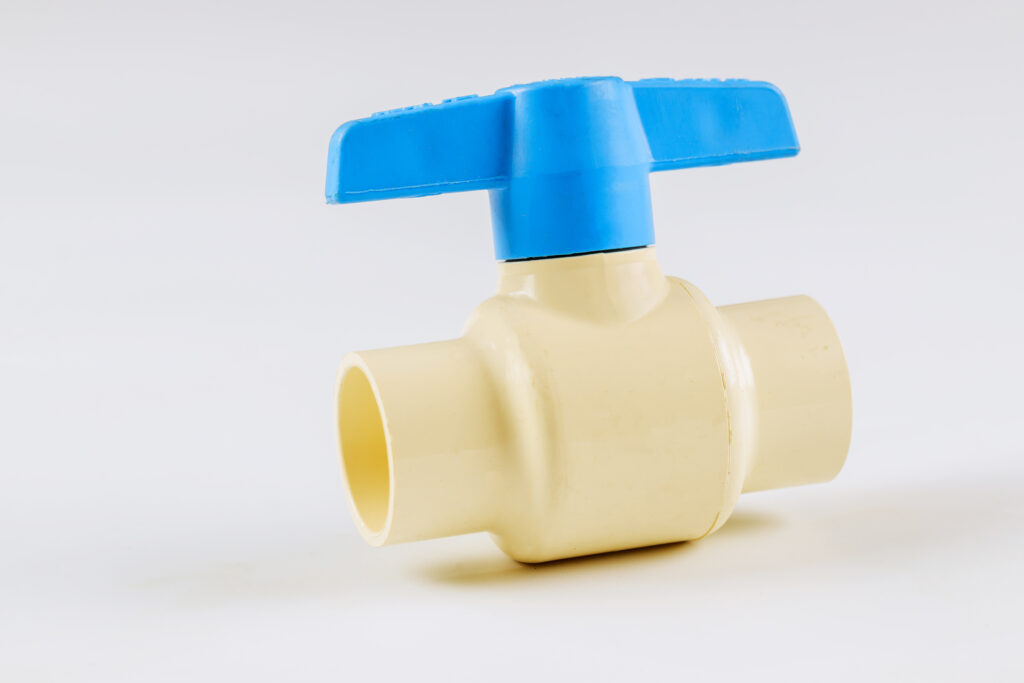
Every plumbing system needs a way to shut off the water supply at a specific point. That is the job of the stopcock valve, and it is one of the most frequently overlooked components in a building’s water network.
Choosing the right stopcock valve in Malaysia matters more than most buyers expect. The wrong size, head type or material can make isolation difficult during a repair, or lead to leaks and replacement work within a few years.
This stopcock valve Malaysia guide explains what stopcock valves do, the sizes and head types commonly used in Malaysian plumbing, and the practical points to consider before placing an order.
What Is a Stopcock Valve?
A stopcock valve is a control valve installed in a water line to start, stop or restrict flow to a particular section of the system.
Turning the head opens or closes an internal seat inside the valve body. When the valve is closed, water is held back at that point, allowing work to be carried out downstream without draining the whole system.
Stopcocks are commonly installed:
- At the main incoming supply to a building
- Before a water tank or storage tank
- At branch lines serving a bathroom or kitchen
- Ahead of a water heater or filtration unit
- At outdoor or garden supply points
Why Does Stopcock Selection Matter?
A stopcock spends most of its service life in one position. It is then expected to operate smoothly at the exact moment it is needed, often years after installation.
Where an unsuitable valve has been fitted, building owners may encounter:
- A head that seizes and cannot be turned by hand
- Incomplete shut-off, leaving a slow drip during repairs
- Weeping around the spindle after repeated use
- Restricted flow caused by an undersized valve
- Corrosion or scaling in the valve body
- Difficult access because of the head orientation
Selecting the correct valve at specification stage avoids most of these problems and keeps future maintenance straightforward.
Common Stopcock Valve Sizes in Malaysia
Stopcock valves are specified by the nominal bore of the pipe they connect to. Three sizes cover most residential and light commercial work.
15mm
The most widely used size in domestic plumbing. It suits branch lines feeding a single bathroom, kitchen sink, water heater or washing point.
20mm
Used where a larger flow is required, such as a supply serving several fixtures, a tank feed, or a line running a longer distance.
25mm
Typically specified for main incoming supplies, larger storage tanks, or light commercial installations where higher volume is expected.
Fitting a valve smaller than the pipe run creates a restriction, so the valve size should follow the pipe specification rather than the other way round.
Stopcock Head Types and What They Suit
The head is the part the user actually touches, and the choice affects how easily the valve can be operated.
Cross Head
A four-arm head that gives good grip and leverage. It is a practical choice for valves that may sit unused for long periods, and for concealed or less accessible positions.
Lever Head
A single arm allowing quick operation with one hand. Useful where the valve needs to be reached in a hurry, or where the user may have limited grip strength.
Tee Head
A compact three-arm profile suited to tighter spaces where a full cross head would be awkward to turn.
Round Head
A smooth circular head with a cleaner appearance, often preferred where the valve is visible in a finished space.
Curve Head
A contoured profile that balances grip with a softer visual finish, suitable for exposed installations in residential projects.
Plastic and Metal Stopcock Valves Compared
Both material types are used across Malaysian plumbing, and each has situations where it performs well.
Engineering plastics offer good resistance to corrosion and scaling, lighter weight for handling and transport, and lower unit cost across a large installation. They are widely used for cold water lines, garden and outdoor supply points, and general residential distribution.
Metal valves are generally selected where higher temperatures or pressures are involved, or where a specification calls for them.
For a fuller comparison of how the two materials behave in service, see our guide on plastic versus brass taps.
How to Choose the Right Stopcock Valve
1. Confirm the Pipe Size
Match the valve to the nominal bore of the pipe it will join. This is the first specification to fix, because it determines everything else.
2. Consider Where It Will Be Installed
A valve inside a service duct has different access requirements from one mounted on an external wall. Position influences both the head type and the finish.
3. Think About Who Will Operate It
If a homeowner may need to close the valve in an emergency, a lever head is easier to use than a head requiring several turns.
4. Check Consistency Across the Project
For a development with many units, using a consistent valve type simplifies installation, staff familiarity and future replacement.
5. Confirm Supply Continuity
Replacement parts are easier to source years later when the valve comes from a manufacturer with a stable product range.
Installation and Maintenance Points
A few habits extend the working life of a stopcock valve:
- Leave enough clearance around the head so it can be turned fully
- Install with the flow direction the valve is designed for
- Avoid over-tightening threaded connections
- Operate the valve occasionally so it does not seize in one position
- Record valve locations so they can be found quickly in an emergency
Sin Yang Plastic’s Stopcock Valve Range
Sin Yang Plastic manufactures plastic hardware for plumbing and sanitary applications, including a dedicated stopcock valve Malaysia range covering 15mm, 20mm and 25mm sizes with cross, lever, tee and round head options.
The same catalogue includes related plumbing hardware such as bib taps, two-way taps, angle valves and pipe fittings, which allows a project to be supplied from one source.
For buyers who need a component built to their own specification, OEM manufacturing and tooling services are also available.
Stopcock Valve Malaysia: Questions to Ask Before Ordering
- Which sizes are available, and are they held in stock?
- What head options can be supplied for each size?
- What material is used for the body and the internal seat?
- Is the valve suitable for the pressure in this installation?
- What are the lead times for larger project quantities?
- Will the same model remain available for future replacement?
Final Thoughts
A stopcock valve is a small part of a plumbing budget, but it determines how easily the system can be isolated when something goes wrong.
Getting the size right, choosing a head that suits the position and the user, and buying from a manufacturer with a consistent range will usually prevent the problems that show up years later.
To discuss sizes, head options or project quantities, contact the Sin Yang Plastic team.
Frequently Asked Questions
Common questions about stopcock valves and plumbing isolation